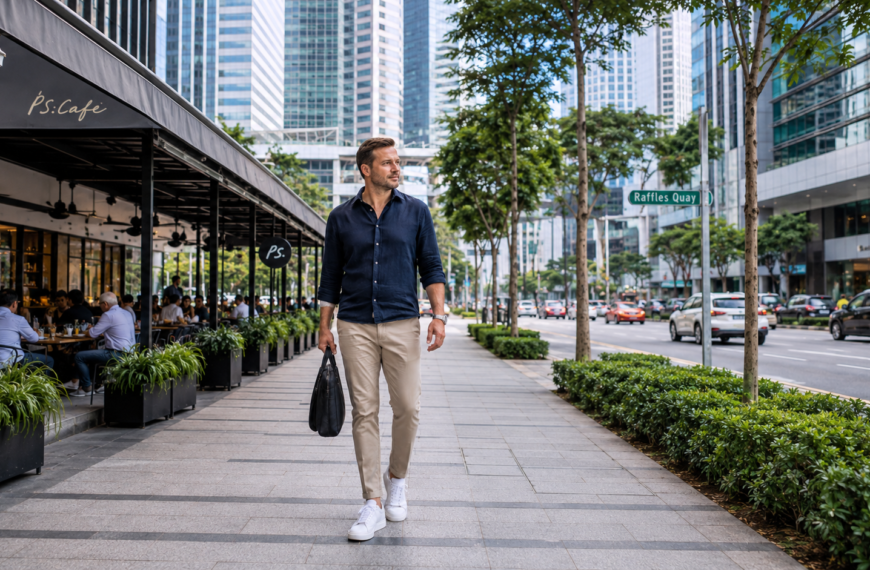



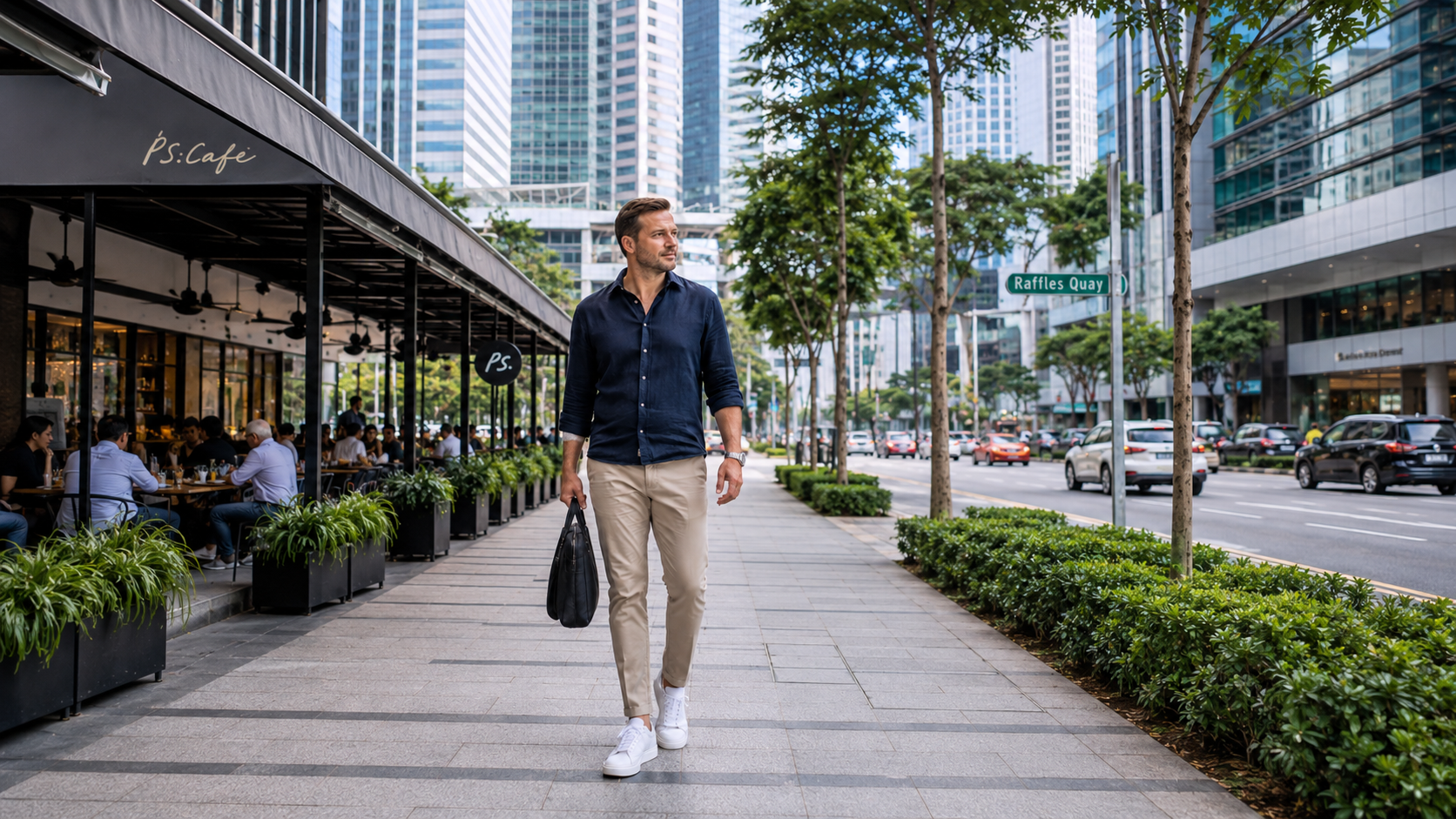
Most people have a certain impression of expatriates, particularly the ones in Singapore. Rooftop bars. Private clubs. Condos near town. International school runs. Sunday brunches. Someone talking about taking a weekend break in Bali as if it is only a slightly longer Grab ride away. Of course that is not without basis. There was a time when expats meant a great deal (back in those days when Percy Faith elevator/yacht music played in the background). Like many private clubs exclusive only to expats, for example, the American Club in an inaccessible part of Orchard were hallmark of their privileged status. Then there were Marina Bay cocktail bars, Dempsey restaurants, private gyms, imported groceries and weekend flights to make their lifestyle seems fantastical, particularly in comparison to the locals. However, those expats were perhaps fast becoming a minority for the rest of those who came to work in Singapore, who also happened to have an “expatriate” label on them.
Let’s break down the prices for those fancy expats (and we are not even talking about those from another league who lived in Sentosa Cove). A typical central one-bedroom condo can run S$3,800 to S$5,000 a month. A casual “healthy” salad bowl lunch is often S$18 to S$28. A daily S$8 flat white becomes S$240 a month before we take into account the breakfast costs. Add Grab rides, imported groceries, boutique gym fees and regular aircon use (Singapore can be unbearably hot and humid for most Westerners), and a normal month can reach S$6,500 to S$8,000 without any dramatic spending spree.
Yet there are increasingly more money-saavy expats who manage to take a more practical route. Talk to people who have been here for a decade and you’ll find different advices that sound prudent: Spend where it matters, but stop paying foreigner prices for ordinary things.
For many of them, that means a flat in a mature estate instead of a showpiece condo, hawker food when they want it, homemade lunches when they prefer something lighter, MRT rides for normal days, and groceries from FairPrice or Sheng Siong instead of doing every shop at Cold Storage.
Rent, food, groceries and transport are where the savings usually come from. Get those right and S$1,500 to S$3,000 a month can stay in your account instead of being absorbed by the cheerful capitalists.
Ditch the Condo Bubble
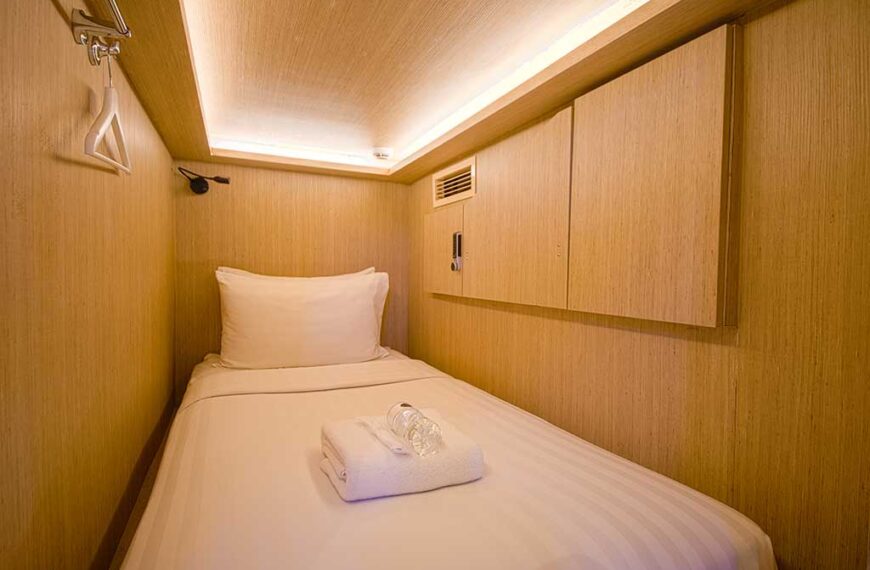
Rent is one of the most significant expenses as an expat in Singapore, especially in a city where property is costly. A central, one-bedroom condo with a pool and gym can easily cost S$3,800 to S$5,000 every month. Nevermind bearing the cost of the maintenance fee that might be offloaded to a tenant.
A sensible decision is renting an HDB flat instead. These are public housing blocks, but many units are privately owned and rented out on the open market. A whole 3-room HDB flat in a mature town often sits around S$2,800 to S$3,300 a month. A larger 4-room flat can land around S$3,300 to S$4,200, depending on the estate.
Central one-bedroom condo: about S$3,800 to S$5,000 per month.
Whole 3-room or 4-room HDB flat: about S$2,800 to S$4,200 per month.
Queenstown, Tiong Bahru, and other city-fringe favourites will not be cheap. A mature estate near good food and fast MRT links still costs money. Even so, a decent HDB at S$3,200 instead of a condo at S$4,500 leaves S$1,300 untouched every month.
Over a year, that is S$15,600. That can cover several trips, build up emergency savings, go into investments, or simply give you more room to enjoy Singapore without tracking every dinner expenses too closely.
You will not have the same condo facilities, but some of those facilities are often overvalued. Also, how often will you use them anyway? Singapore is safe, and public facilities are decent. ActiveSG gyms and public swimming pools cost a few dollars a visit. If you are not using the condo pool, gym or tennis court regularly, you may be paying for a lifestyle label more than a real benefit.
Living in an HDB area also gives you a more grounded version of Singapore. You get better accessibility and amenities at your convenience. You also have to be less conscious dressing up casual when sharing lifts with strangers (you don’t have to greet everyone if you don’t feel like it, like how they often do it in condo too). Stick to mature estates like Tiong Bahru, Queenstown, Toa Payoh, Bedok, Marine Parade, or the East Coast. They have food, trees, transport and established amenities. For better value, look one or two MRT stops away from those more popular estates.
For furniture, buy second-hand unless you have a strong reason not to. Facebook expat groups, Carousell and moving-out listings are full of people leaving Singapore with only a few days to clear a sofa, dining table or bed frame. A S$1,200 sofa can become a S$180 sofa if you can arrange collection.
Stop Paying the Grocery Passport Tax
Shopping only at expat-focused grocery stores is one of the quickest ways to raise your monthly costs. Little Farms may seem more “familiar,” especially for imported items, comfort food or specific ingredients from the West. But using it as your default supermarket can make ordinary groceries much more expensive than they need to be.
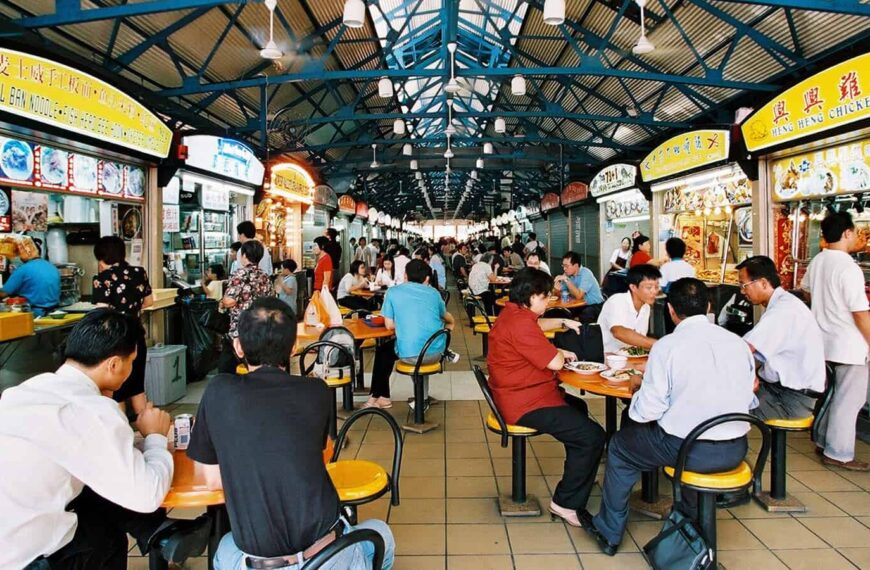
Hawker food is one of Singapore’s great advantages, especially for budget control. Chicken rice, laksa, fishball noodles, nasi lemak, prata, or a loaded plate of economy rice often lands around S$4 to S$8. Add a drink and an egg, and the total is usually still under S$10.
Daily hawker food does not suit every person or every stomach, especially if you are raised on bread, milk and cheese. Some meals are heavier, oilier, saltier, or simply not what you want before going back to work. This is where many expats end up buying sandwiches and salad bowls.
A CBD salad bowl can easily cost S$14 to S$22 before the add-ons begin. Salmon, avocado, quinoa, feta, seeds, roasted vegetables, extra dressing and premium protein all push the total up. It may feel like a light lunch, but the receipt is not always light.
Making your own version is usually much cheaper. A bag of greens, cherry tomatoes, cucumber, eggs, tofu, chicken breast, canned tuna, chickpeas, nuts, dressing and a few toppings from NTUC FairPrice can stretch across several meals. Sheng Siong brings the cost down further if you are comfortable shopping somewhere more basic and local.
Often around S$14 to S$22 each. Four a week can run S$224 to S$352 a month.
Roughly S$4 to S$7 per serving if you shop sensibly and prep a few portions at once.
The saving then becomes apparent and attractive. Swap four S$18 salad bowls a week for homemade versions at around S$6 each, and about S$48 stays with you every week. That is roughly S$190 to S$200 a month saved from one lunch habit.
For normal groceries, use NTUC FairPrice or Sheng Siong as your default. Cold Storage and Giant can still fill the gaps when you need better and more refined selections and imported items. But Little Farms and Jones the Grocer are something that will stretch the budget further.
Basic produce, rice, noodles, eggs, tofu, chicken, pork, regional seafood, sauces, frozen vegetables and household items are usually much cheaper at FairPrice, Sheng Siong or Giant. Sheng Siong is not fancy, but the price difference can be meaningful if you are doing a full grocery run.
Late-evening clearance tags can also help if you cook meat. Adjust the home menu a little and the savings become easier. If most of your weekly basket is beef, berries, cheese, imported cereal, fancy yoghurt and European snacks, the bill will climb quickly. Keep those as occasional buys and let the regular basket stay practical.
A single person mixing hawker meals, simple homemade lunches and sensible grocery runs can often keep food around S$500 to S$800 a month without making life miserable. Push harder and S$400 to S$600 even becomes possible without any real inconvenience. Keep ordering delivery, buying cafe lunches and filling the fridge like you are still in London, Sydney or California, and S$1,500 can disappear without much effort.
Well, please do spend on meals you genuinely enjoy, but stop letting every weekday lunch become a S$20-plus decision. A homemade salad is not exciting, but neither is paying restaurant prices for chopped vegetables four times a week.
Control the Coffee Habit
Coffee at cafe looks like nothing much until you add up the monthly number. A flat white at a nice cafe is often S$6 to S$8. One every working day becomes S$120 to S$176 a month. Make it daily, including weekends, and you are at S$180 to S$240.
Add pastries twice a week and the routine starts competing with your utilities bill. The problem is not one coffee. It is the habit becoming automatic.
You do not have to give up cafe or fancy coffee entirely. Keep it for the days when you are actually sitting down and enjoying it. For the functional morning caffeine hit, kopi from a hawker centre or coffee shop is usually around S$1.30 to S$2. A basic home setup also works. Even better still: brew your own coffee at home.
S$6 to S$8 each. Daily habit: roughly S$180 to S$240 per month.
Often around S$1.30 to S$2 at hawker centres and coffee shops.
S$200 a month is S$2,400 a year. That is a flight, a hotel stay, or a useful addition to your savings.
Do Not Turn Grab Into a Lifestyle
Owning a car in Singapore is expensive, mainly because of the Certificate of Entitlement (COE) system. A basic family sedan can cost far more than many newcomers expect, even before parking, petrol, insurance, ERP and maintenance.
The MRT and bus network does the job for most people. It is clean, efficient, and cheap by global city standards. Most adult card fares sit roughly between S$1.28 and S$2.57 per ride, depending on distance. A normal public transport month often lands around S$100 to S$180 for regular commuting and weekend movement.
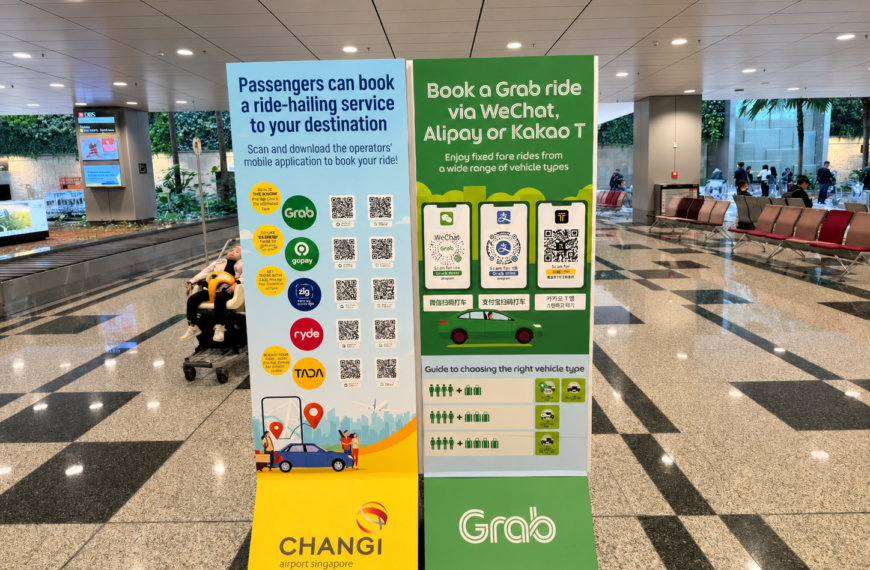
Grab is useful, but it becomes expensive when it turns into the default. A short ride might be S$12 to S$18. A wet-weather or peak-hour ride can easily become S$25 to S$40. Four S$20 rides a week already becomes around S$320 a month.
Often around S$100 to S$180 per month for regular commuting and weekend movement.
Four S$20 rides per week already becomes around S$320 per month.
Watch the Aircon
Air conditioning is another cost that adds up quickly. It is easy to underestimate because the expense only appears later in the utilities bill.
A sensible single person in a modest flat might keep utilities around S$120 to S$220 a month. Run multiple aircon units every night and through the day, and S$300 or more can become quite common.
Set a timer so the aircon turns off after you fall asleep, use ceiling fans, clean the filters, and keep the temperature at a reasonable 25 degrees Celsius. You stay comfortable, but you are not cooling rooms you are not using.
The True Cost Breakdown
A foreigner-bubble version of Singapore can easily reach this:
| Category | Monthly cost |
|---|---|
| Central condo | S$4,500 |
| Western groceries, cafe lunches and delivery | S$1,400 |
| Daily coffee and snacks | S$250 |
| Grab-heavy transport | S$500 |
| Utilities with heavy aircon use | S$300 |
| Private gym or condo lifestyle extras | S$200 |
| Phone, subscriptions, household items, and random admin | S$400 |
| Total | Around S$7,550 per month |
A more sensible version looks closer to this:
| Category | Monthly cost |
|---|---|
| HDB flat in a good mature estate | S$3,000 to S$3,500 |
| Hawker meals, DIY lunches and local groceries | S$500 to S$800 |
| Occasional cafe coffee instead of daily cafe coffee | S$60 to S$100 |
| MRT and buses, with Grab only when needed | S$120 to S$200 |
| Utilities with sane aircon use | S$120 to S$220 |
| ActiveSG gym, public pool, or simple fitness setup | S$30 to S$80 |
| Phone, subscriptions, household items, and random admin | S$300 to S$400 |
| Total | Around S$4,130 to S$5,300 per month |
If you rent a room instead of a whole unit, the gap grows even wider. A decent common room or master room can cut rent by another S$1,000 to S$2,000 a month. Singapore is a place that is not only for the rich, but also for the sensible who want to stay rich (or keep things affordable) while living a decent lifestyle.
So next time when you go home for Christmas, Thanksgiving, or the annual family gathering where relatives ask how manage to do in Singapore, you can simply smile and often someone a select cut of the turkey.
Planning your Singapore trip or move?
If you are coming to Singapore soon, sort out the practical details before you arrive. Check your entry requirements, SG Arrival Card, transport options, payment methods, customs rules, weather, food costs, and the basics most visitors only discover after landing.
Use the Singapore Travel Guide on BudgetSingapore.com before you fly. It is built for travellers who want the useful details upfront, before they start paying too much for avoidable mistakes.
Read the Singapore Travel Guide